




Third Life
Third Life is a post-ecological manifesto, a new agreement with the non-human.
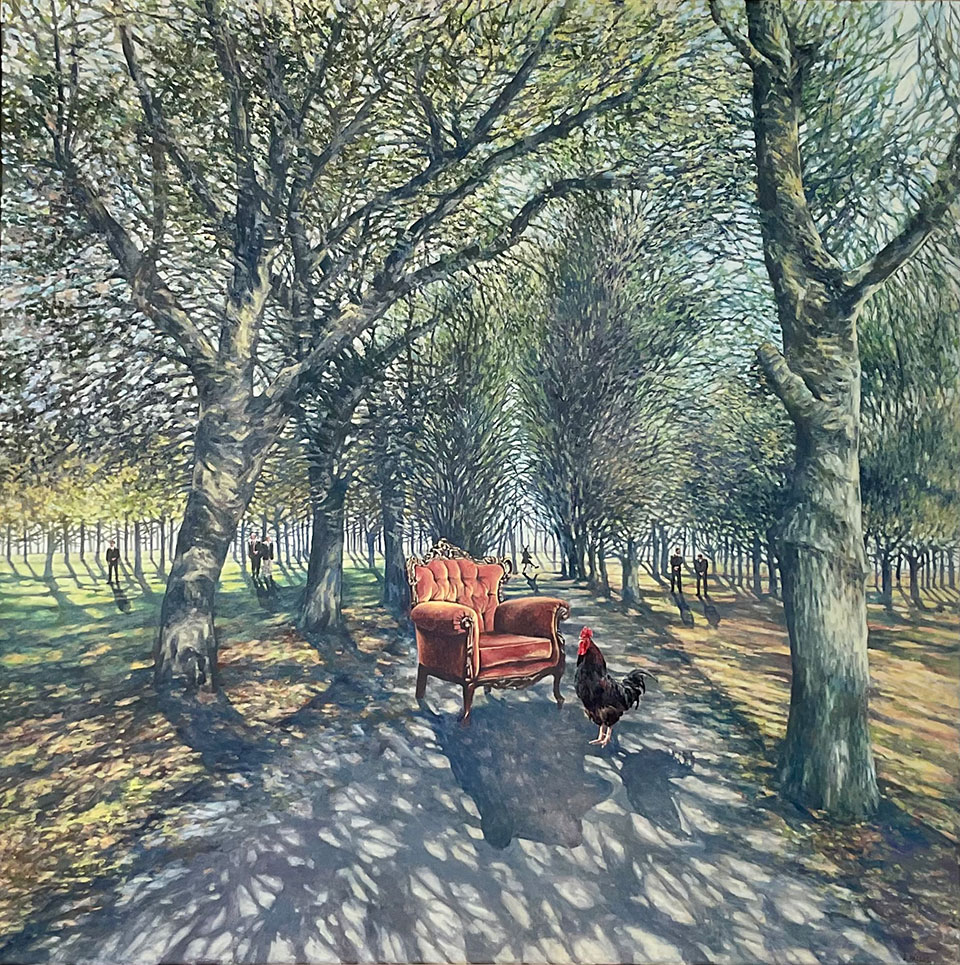
In the new work of Constantin Massos, place and landscape meet. The landscape is a cultural concept that we perceive as a natural unity, while place is a cultural notion we understand as identity, as a multifaceted, natural, and human-made entity. Massos does not simply paint landscapes; he creates landscapes/places, natural unities that encompass cultural entities . We could divide his works into two categories: on the one hand, the human’s domineering tendency over place/landscape, and on the other, the Third Life, the redefinition of humanity’s relationship with the landscape/place.
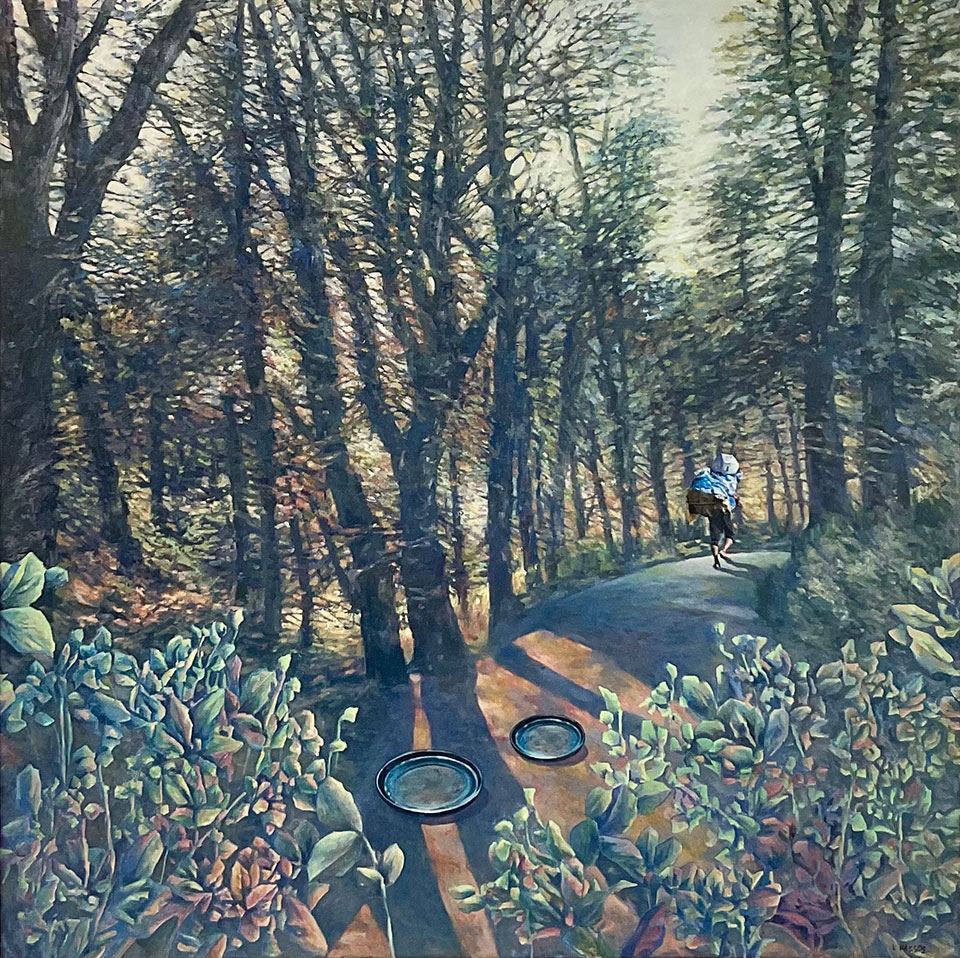
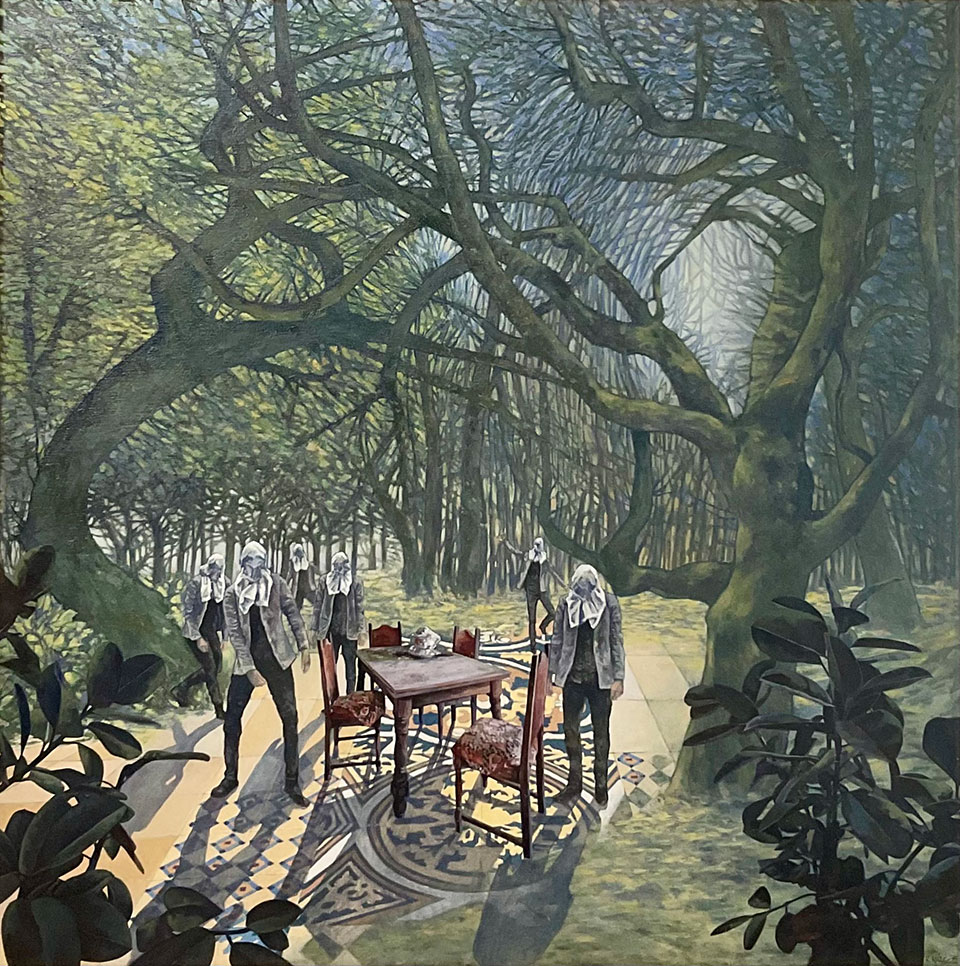
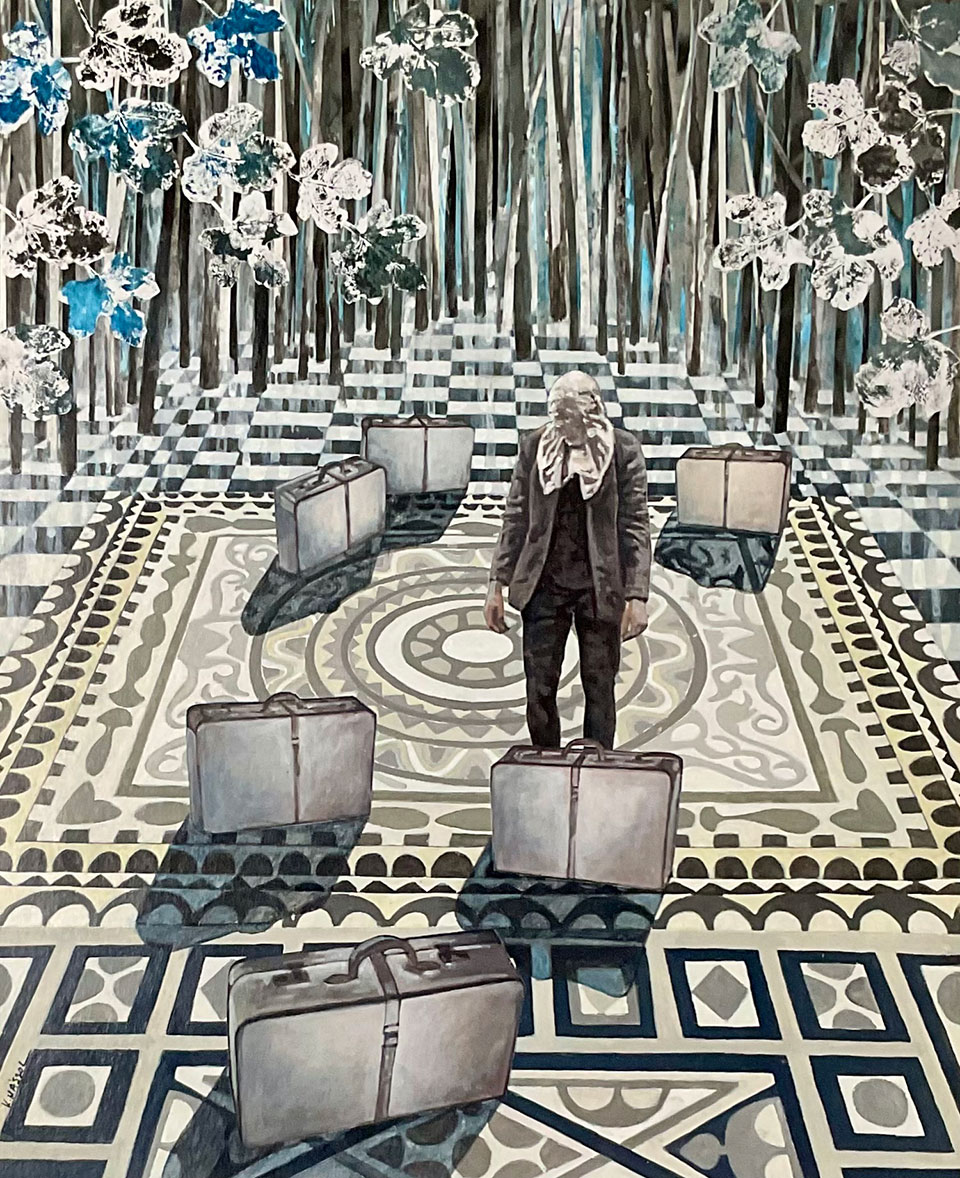
Two headless mannequins as modern-day Adam and Eve, hooded figures carrying suitcases and moving boxes, compose Massos' narrative of the original sin. Humanity's inherited inclination towards a reckless life proves that humans are a self-centered species with destructive and self-destructive tendencies, worshipping a barren sense of superiority.
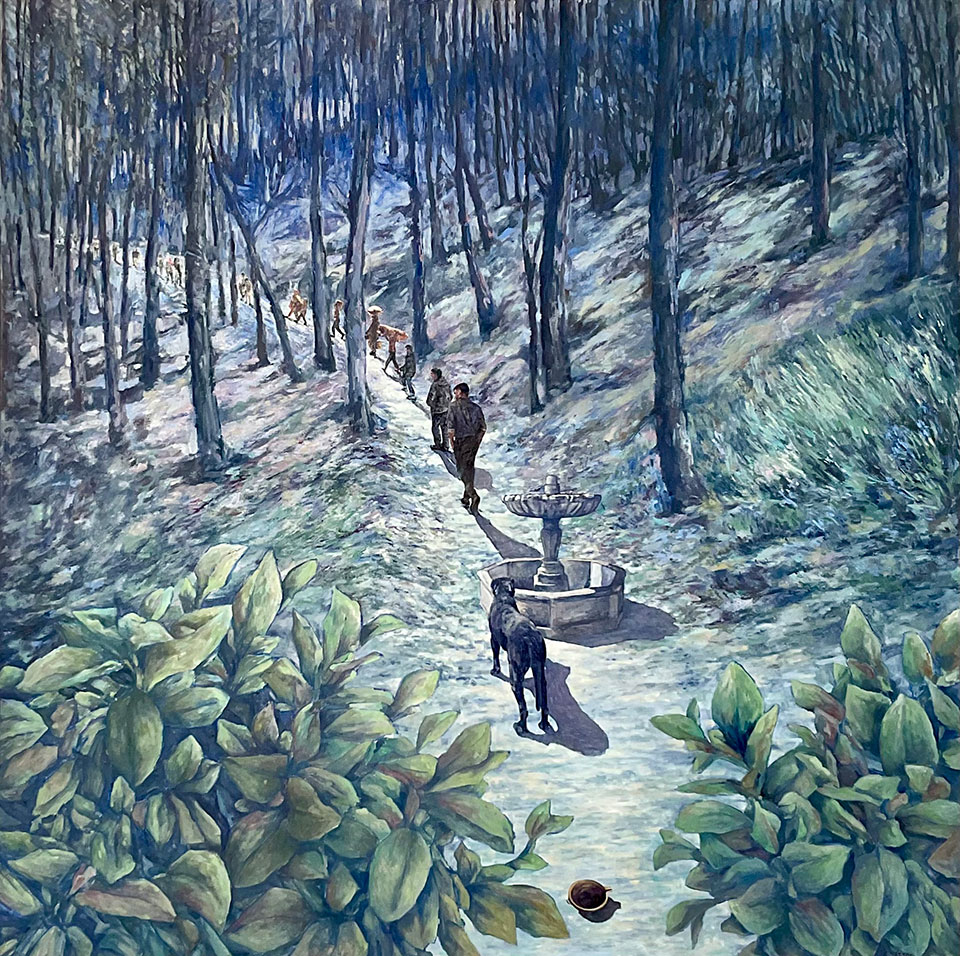
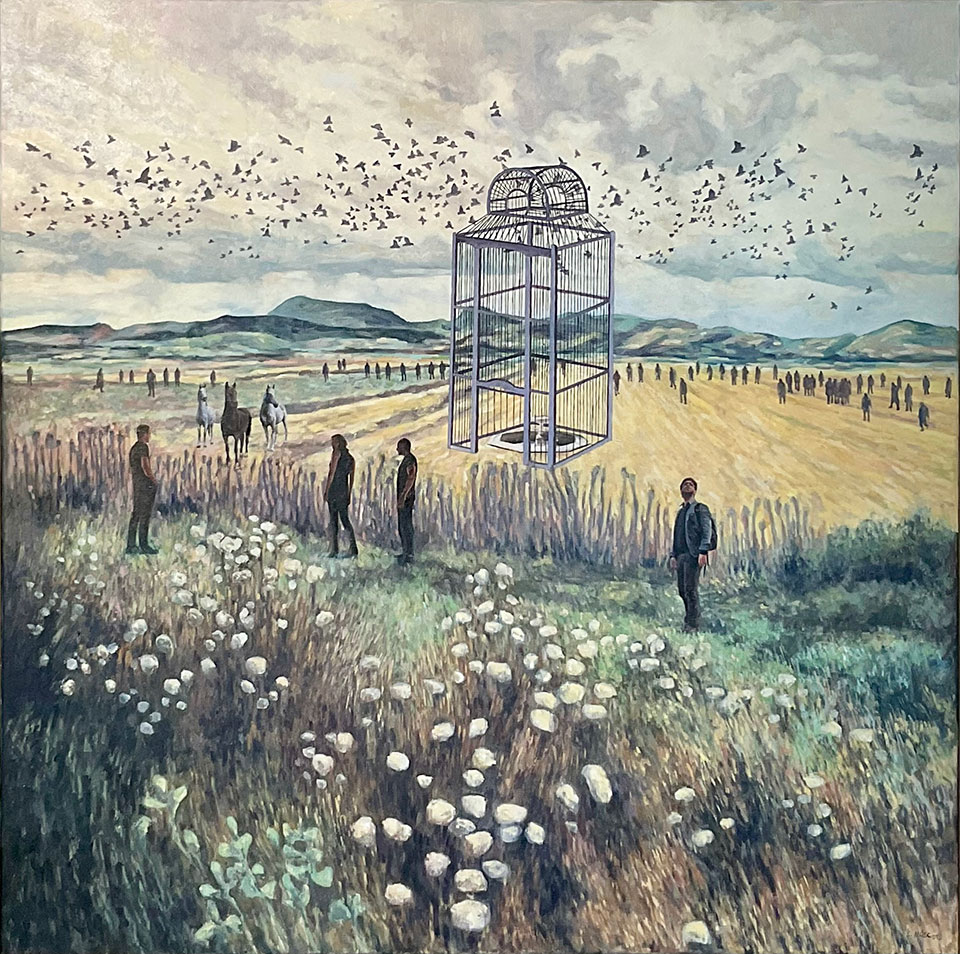
In the work Cinema Paradiso, a cinema/theater has sprouted in the middle of the forest, and on the stage, an enclosed human is trapped within their own creation. A barren field, a caged fountain, a flock of birds searching for fertile land, a crowd leaving behind an empty marble fountain, the hooded traitors of nature, the arid landscapes, and the invasion of humans into the place/landscape of wild animals are some of the 'scenes' one can distinguish in Massos' frames. Civilization proves to be the only safe path to showcasing human power and dominance over the environment.
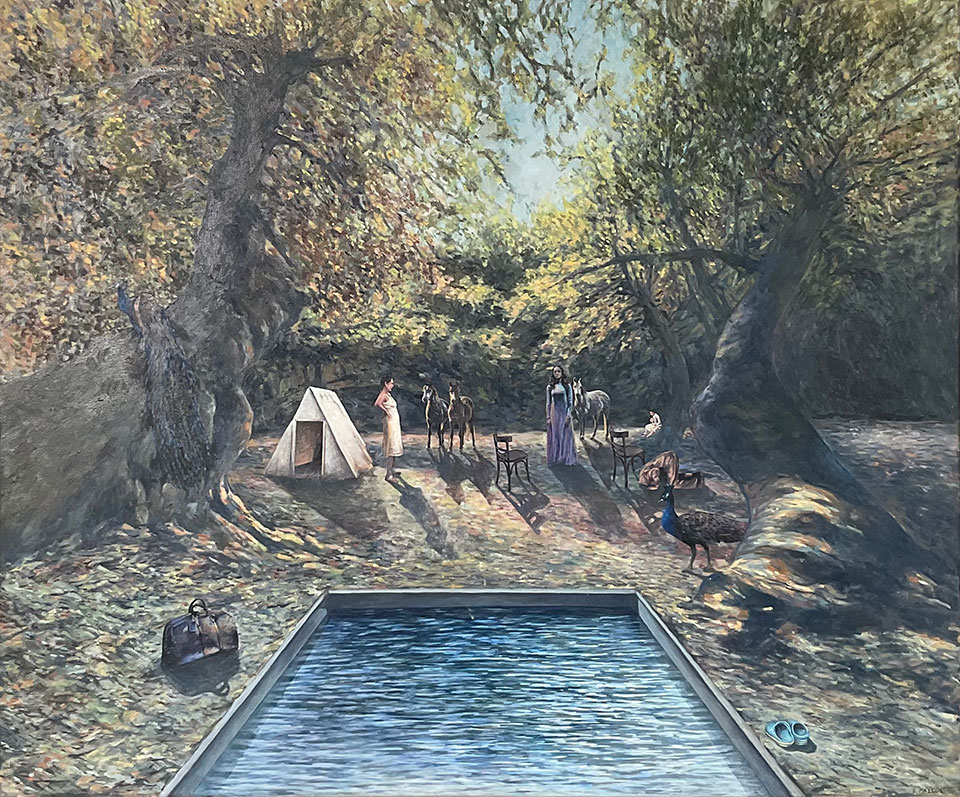
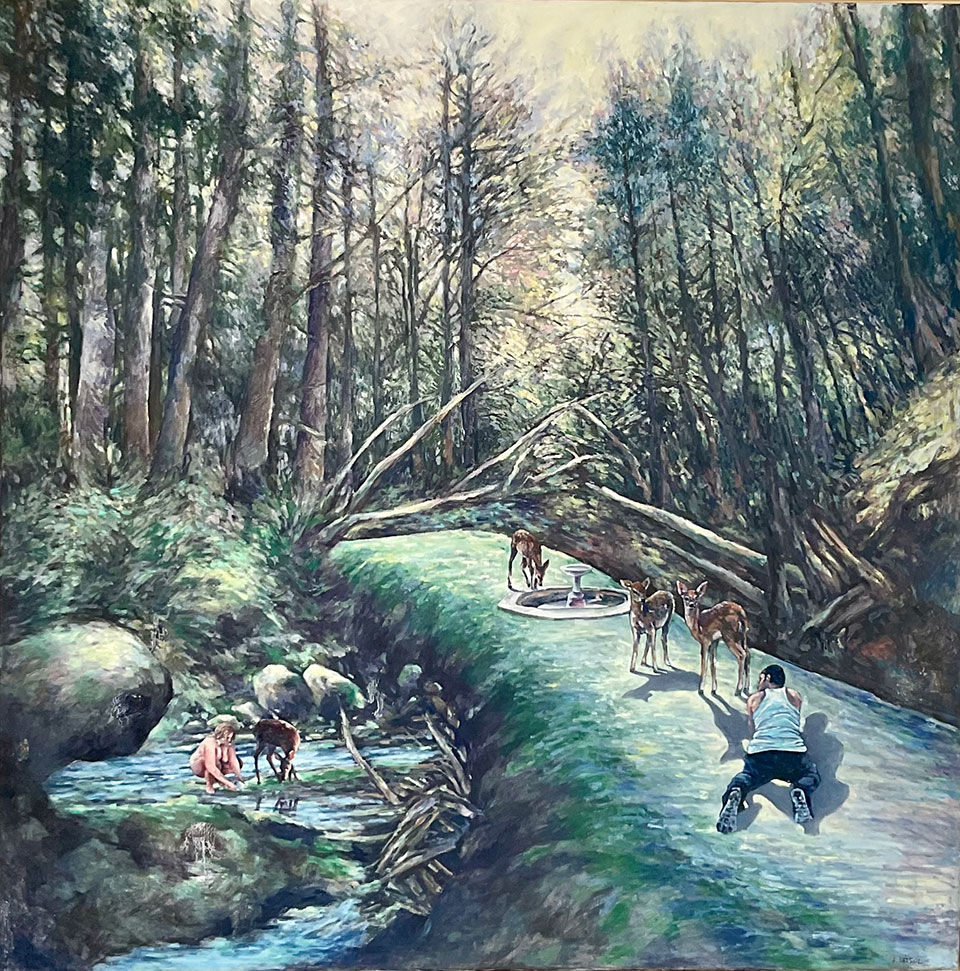
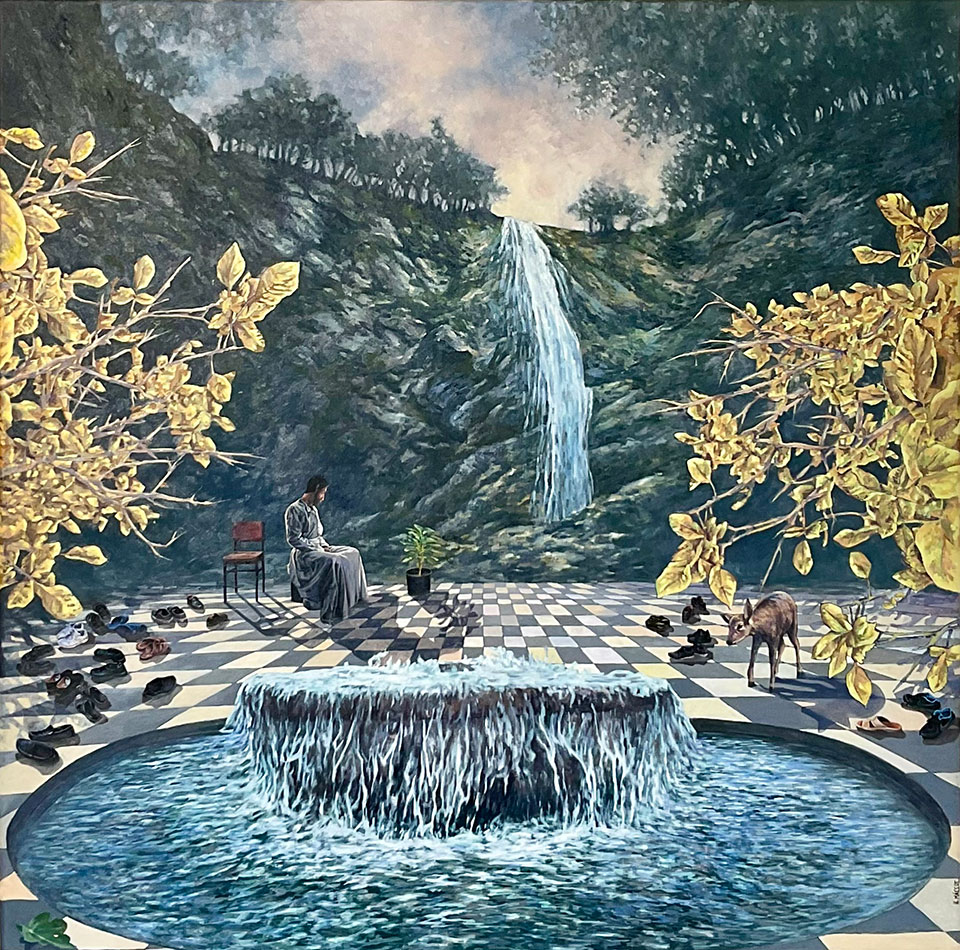
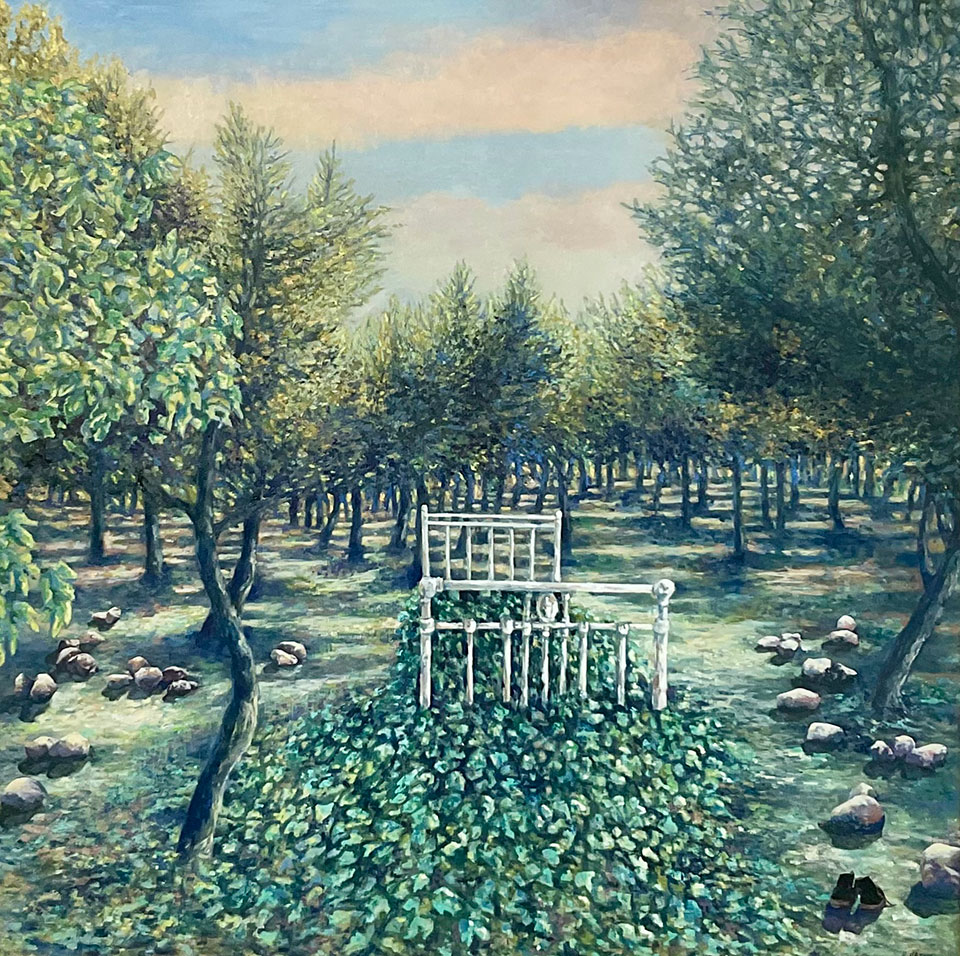
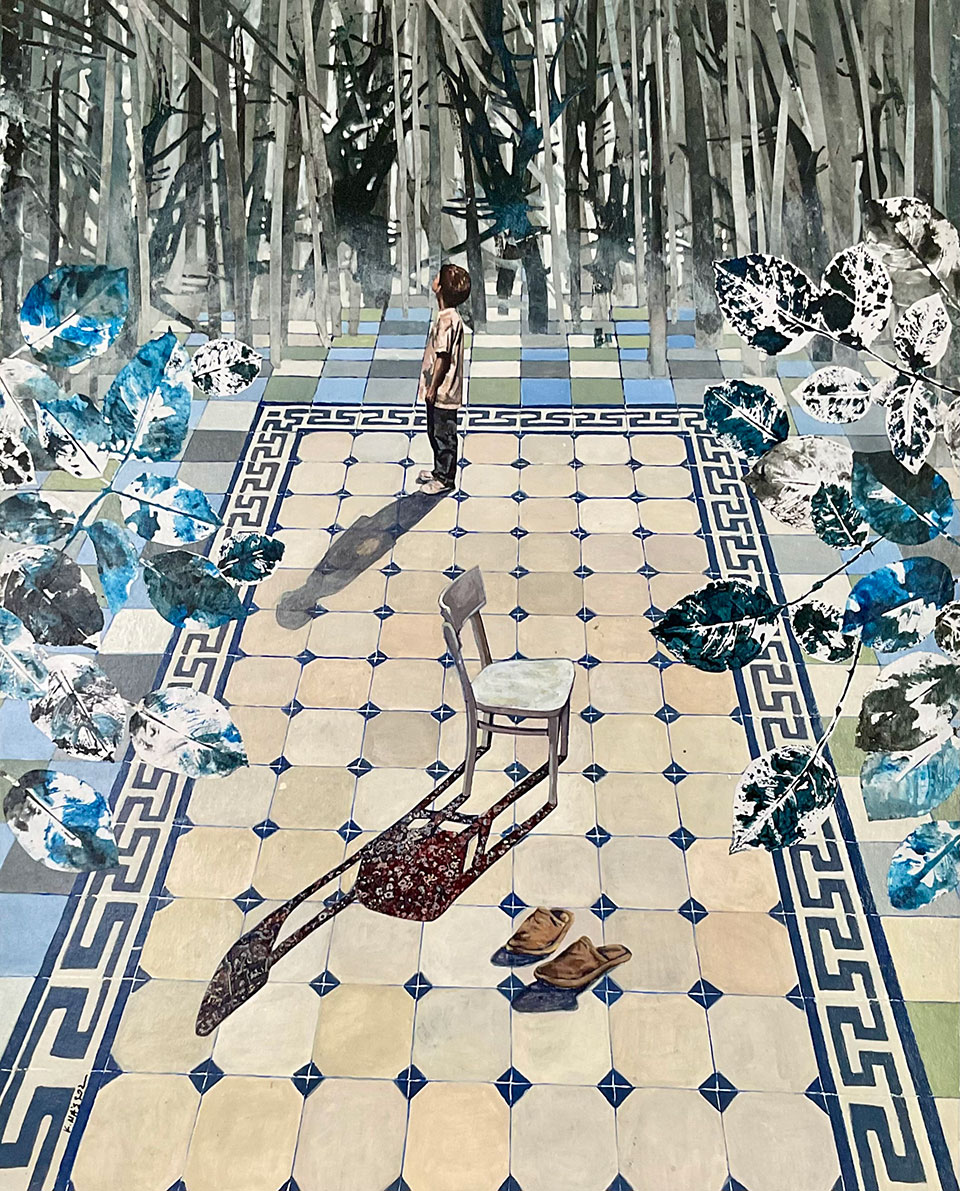
With the term Third Life, Massos suggests a new era in which humanity must surpass itself, rethink the concept of nature and culture, and re-examine its dominion over the Earth. In the work Padre, Massos creates a surrealistic scene where culture and nature coexist harmoniously. The silent presence of humans is suggested by their shoes, which they have removed as a sign of respect for the landscape/place. In the work Retreat, a mysterious, almost magical encounter in a wooded area—with a tent, a pool, and several figures, both human and animal, all bathed in soft, diffused light—evokes the sense of a hidden refuge where humans meet nature in peace. Forests, running waters, a child playing by the riverbank, a bed merging with the natural environment, a girl sharing water with a deer invite the viewer to pause the hedonistic inclinations that utilitarianism imposes at the expense of nature.
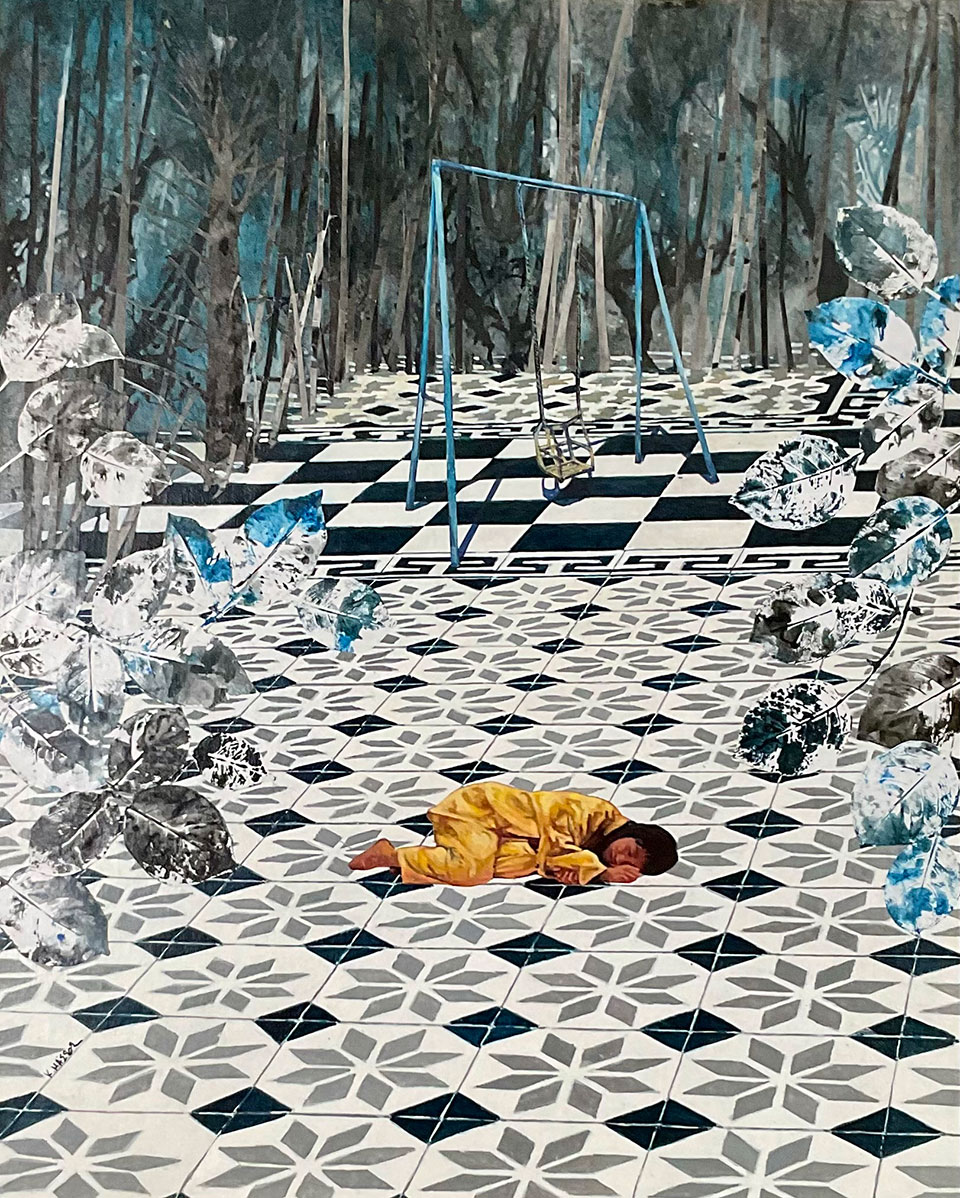
Once again, Massos creates allegories and timeless landscapes with symbolism, while remaining faithful to an otherwise realistic painting style, though avoiding the noisy demonstration of technical skill. His works, both fantastical and surreal, seem peaceful at first glance. However, upon closer inspection, the disruption of real conditions reveals itself as inherently threatening. Will humanity manage to transcend itself, or is the crossing of the boundary a fall towards the demonic?
Natalia Mitsioni
Art Historian
Εxhibition opening:
Thursday 24 October 2024 / Time 19:30
Opening Hours:
Tuesday - Thursday – Friday: 12:00 – 21:00
Saturday: 12:00 – 15:00